

Exploit AI to Defeat AI: Revolutionizing Cybersecurity in the Age of Intelligent Threats
Introduction
AI-driven cyberattacks have become a formidable challenge for organizations worldwide. Attackers now leverage machine learning (ML) algorithms to launch sophisticated phishing attacks, bypass traditional firewalls, and identify system vulnerabilities with unprecedented speed and accuracy. This evolution demands a shift in defense mechanisms, where traditional tools fall short, and AI-powered cybersecurity take place as a necessity.
AI-Powered Cybersecurity
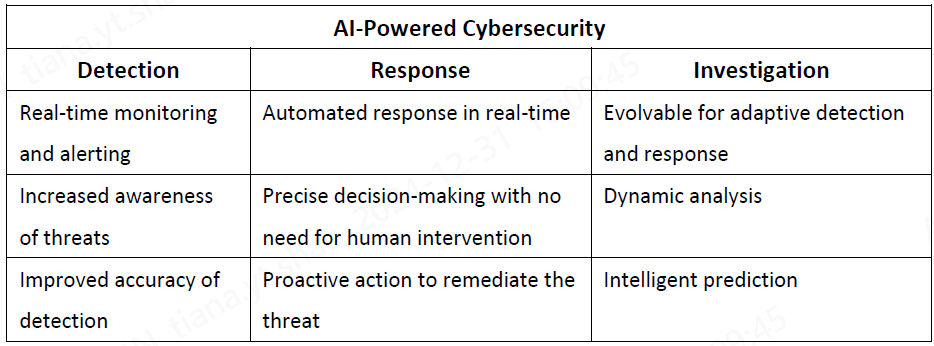
AI-powered cybersecurity like XDR (Extended Detection and Response) offers several advantages that allow organizations to stay ahead of attackers by detecting, predicting, and mitigating threats in real time. Below are key benefits that highlight how AI transforms cybersecurity defenses:
- Early Threat Detection and Containment
With trained AI models, vast amounts of data from endpoint, network, and cloud can be processed and analyzed in real-time. XDR uses advanced machine learning to recognize evolving anomalies and potential threats that traditional SIEM (Security Information and Event Management) would miss. It correlates security events and data from various sources to provide comprehensive security readiness. Unlike rule-based approaches, AI-powered cybersecurity proactively identifies subtle deviations in network traffic and user behavior. By anticipating attack trends with the integration of data, it enables early detection and real-time alerting which allows for rapid containment of risks. These capabilities make organizations remain prepared to address evolving threats effectively.
- Automated Response and Incident Recovery
Speed is critical in cybersecurity. XDR optimize the response to detected threats, minimizing time from detection to containment. It supports automated decision-making and response such as isolating compromised devices promptly, blocking malicious activities, and even reversing harmful changes with remediation actions to avoid potential damage from attacks. Unlike traditional SOAR (Security Orchestration, Automation, and Response) relying on predefined playbooks to automate routine and repetitive security tasks, XDR utilizes advanced analytics based on machine learning to deliver faster and more accurate responses to cyber threats. By addressing threats in real-time, this approach reduces the impact of potential breaches and enhances the organization’s security resilience.
- Adaptive Learning and Prevention
A significant advantage of AI is its capability of continuous learning. As cybercriminals continuously scale up their attack with new techniques including GenAI, AI-powered cybersecurity solutions harness machine learning to adapt, evolve, and proactively counter emerging threats with greater precision. Furthermore, detailed threat reports with intelligent analysis that outline potential vulnerabilities and likely attack patterns provide organizations with actionable insights to fortify their defenses or even block attacks before they occur. It makes defenses remain effective against sophisticated threats, even those designed to bypass conventional security measures. The capability of adjusting dynamically strengthens the overall cybersecurity and provides robust protection against ever-changing risks.
Summary
The rapid advancement of artificial intelligence (AI) has reshaped the cybersecurity landscape, not only for defense but also for attackers. Organizations must embrace AI-powered cybersecurity solutions to maintain a proactive and resilient defense against intelligent threats. By exploiting AI to defeat AI, businesses can safeguard their critical assets and stay ahead of the era.