





We use cookies to allow our website to work properly, personalize content and advertising, provide social media features and analyze traffic. We also share information about your use of our site with our social media, advertising and analytics partners
2021.06.03
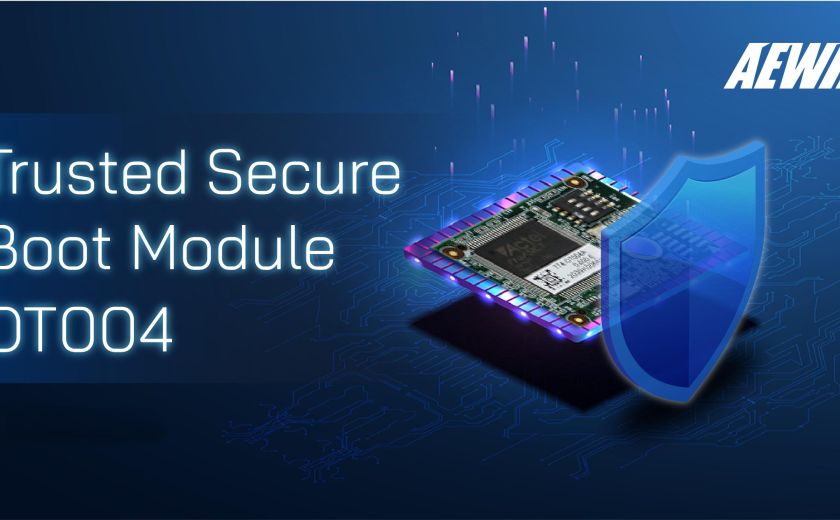
OT004 – AEWIN Trusted Secure Boot module
Hardware platforms are getting more and more complex, and as a side effect firmware have been given even more functionalities and controls even more things than before. Thus, it is absolutely essential to maintain the integrity of the on-board firmware to ensure the security of the data passing through the system. AEWIN is experienced in maintaining the integrity of the system due to prior experiences as ODM for specialized sectors.
2021.05.06
OCP3.0 – The Future Trend
Open Compute Project over the years has introduced many interesting ideas into traditionally conservative server space. The OCP form factor network cards has been one of the breakout technologies that found traction outside of OCP OpenRack compliant servers. The OCP3.0 form factor NICs that is trickling into the market is readying the world for beyond 100Gbps connections.
2021.04.14
PCIe Gen 4 – Exactly what network computing needed and more
We’re excited about the PCIe Gen 4 support across the current x86 platforms from both Intel and AMD. PCI Express (PCIe) has been a boon for standardizing onboard interface between host and various peripherals, from GPU, to NICs, to storage, to USB host. PCIe has enabled interconnection of almost everything imaginable inside a computer.
2021.03.24
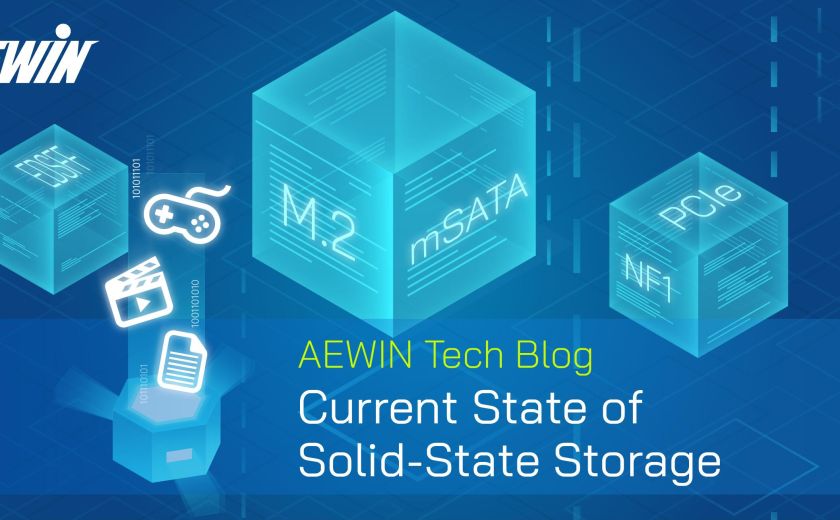
Current State of Solid-State Storage
Spinning drives and fans are the 2 major sources of potential failures inside an otherwise reliable system. Replacing the traditional spinning drives will move the overall system-reliability up another notch. SSDs are not only more reliable, but generally faster in both ultimate read/write performance as well as access latencies which results to more responsive systems. There is plethora of choices of solid-state drives, and we’ll quickly look go through the interfaces and form factors that stuck around, and those that didn’t.
2021.02.19
TDP vs Power consumption
TDP is often misunderstood as the power consumption of the particular component. As the acronym implies, it is a thermal solution requirement for being able to dissipate heat from the particular sustained power. In modern processors and accelerators, there are mechanisms to allow the components to exceed their base clock, thereby increasing the power consumption. This behavior has a variety of trade names, but can be generally summed up to “boost” or “turbo.” This allows the processors to maximize performance when thermal headroom is available, at the cost of increased power usage.