

2021.01.25
Introduction to technologies behind 5G infrastructure
The Evolution of NFV
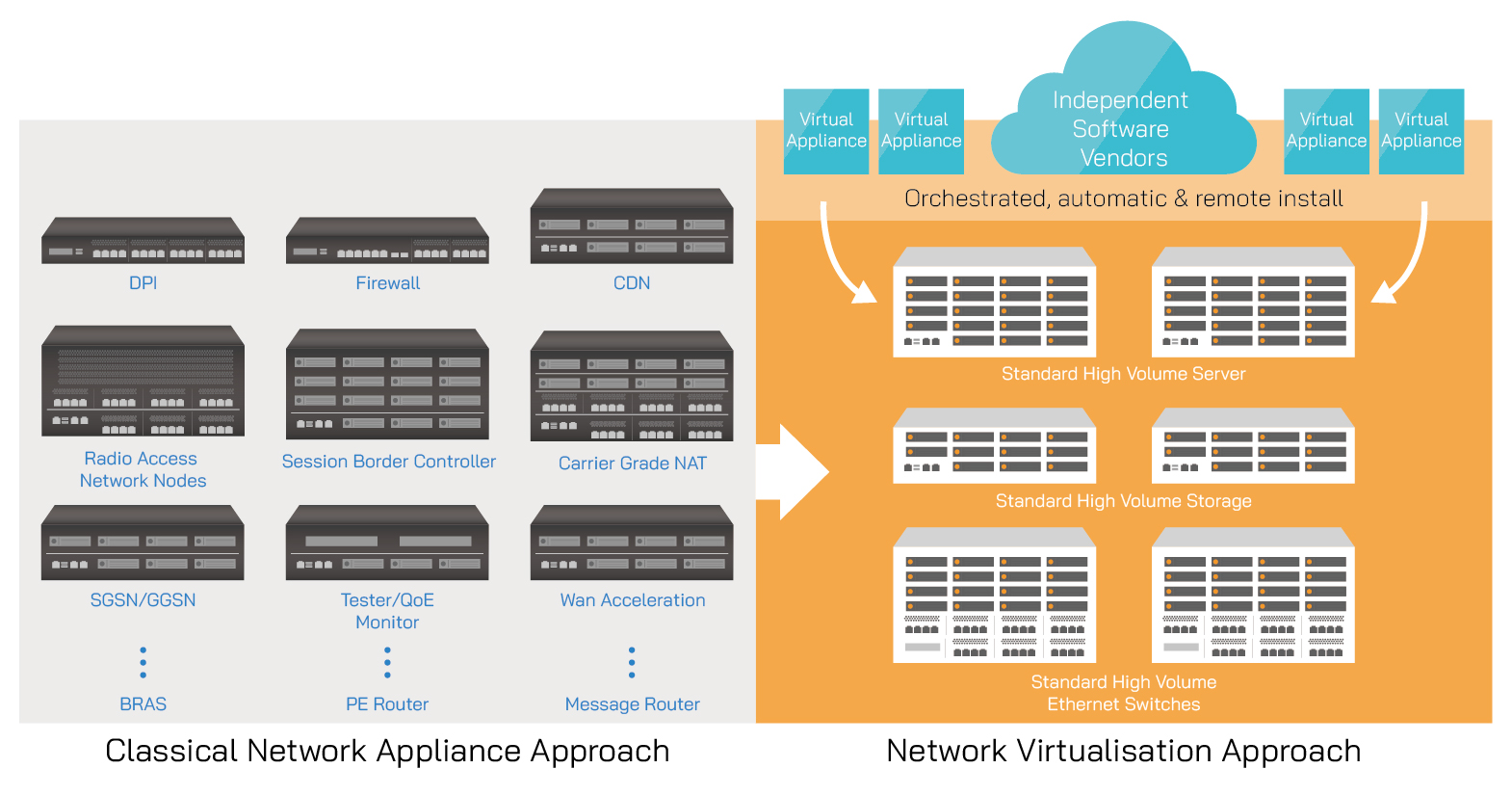
- From closed, propriety, vertical to standard, commodity, horizontal hardware/software/platform.
- Greatly reduce CAPEX and OPEX for telecom operators.
- A new business model of virtualized, modularized, and customized micro-services (network slices).
Network Service Slice
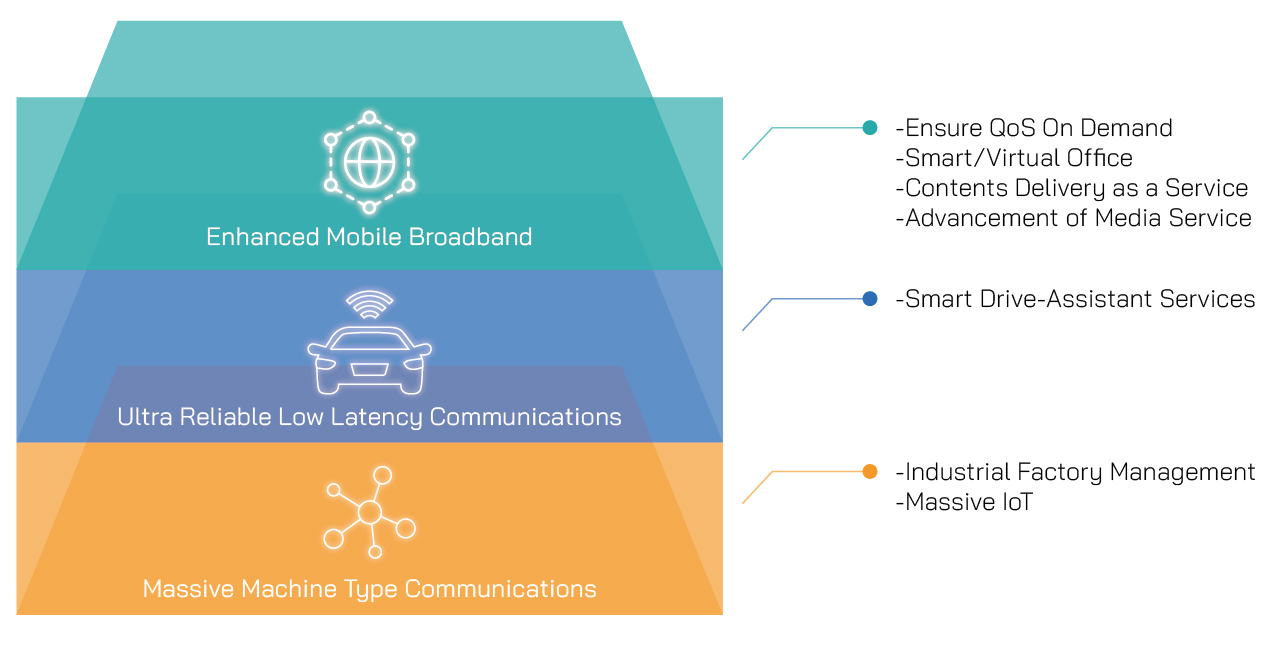
- Slice 1 – Enhanced Mobile Broadband network slice:
CDN (Content Delivery Networking), ICN (Information Concentric Networking) - Slice 2 – Ultra Reliable Low Latency Communications network slice:
IoV (Internet of Vehicles), V2V (Vehicle to Vehicle), V2I (Vehicle to infrastructure), V2X (Vehicle to anything) - Slice 3 – Massive Machine Type Communications network slice:
IoT (Internet of Things)
The Evolution of Radio Access Network
1G/2G RAN: RRH/BBU collocated
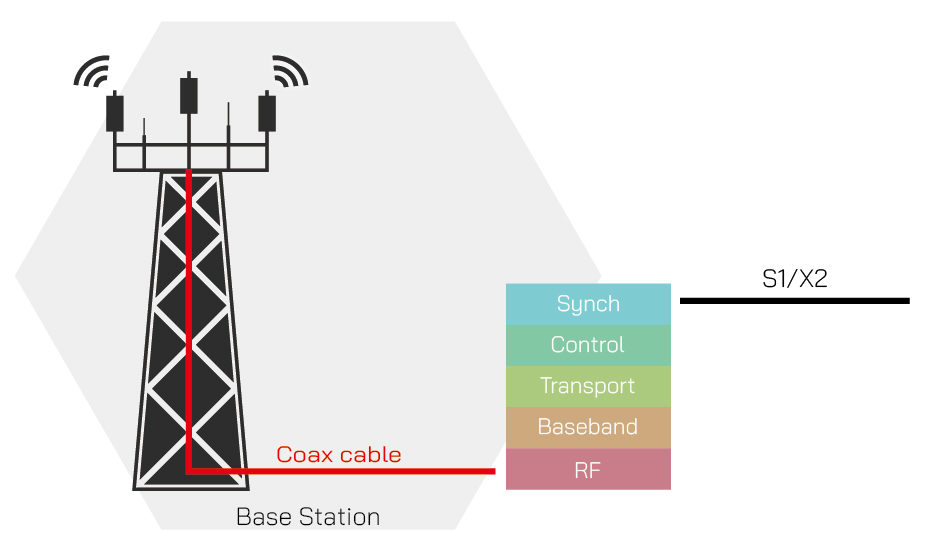
Existing issues:
- Base station must be located beside the antenna because of the rapid signal attenuation of coax cable.
- Huge expense on air condition system for the base stations deployed outdoor.
- Low utilization of base station resources.
- Base stations are difficult to communicate with each other via X2 interface.
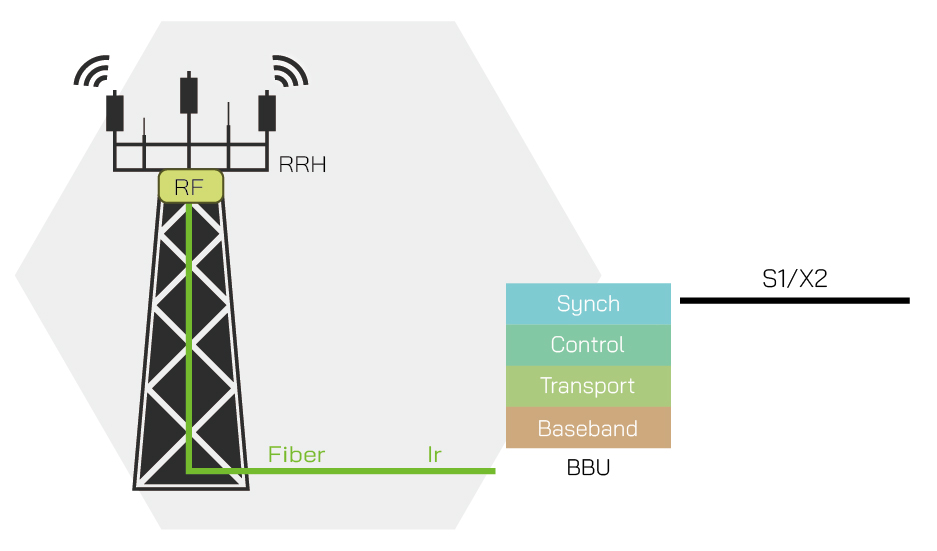
Solved issues:
- Improve flexibility of deployment since theremote radio head function split from baseband unit.
- Indoor BBU deployment can reduce air conditioning cost.
Existing issues:
- Low utilization of base station resources.
- Base stations are difficult to communicate with each other via X2 interface.
Additional issues:
- Require low latency and accurate synchronization on Ir interface.
4G/B4G RAN: vBBU/RRH fixed function split
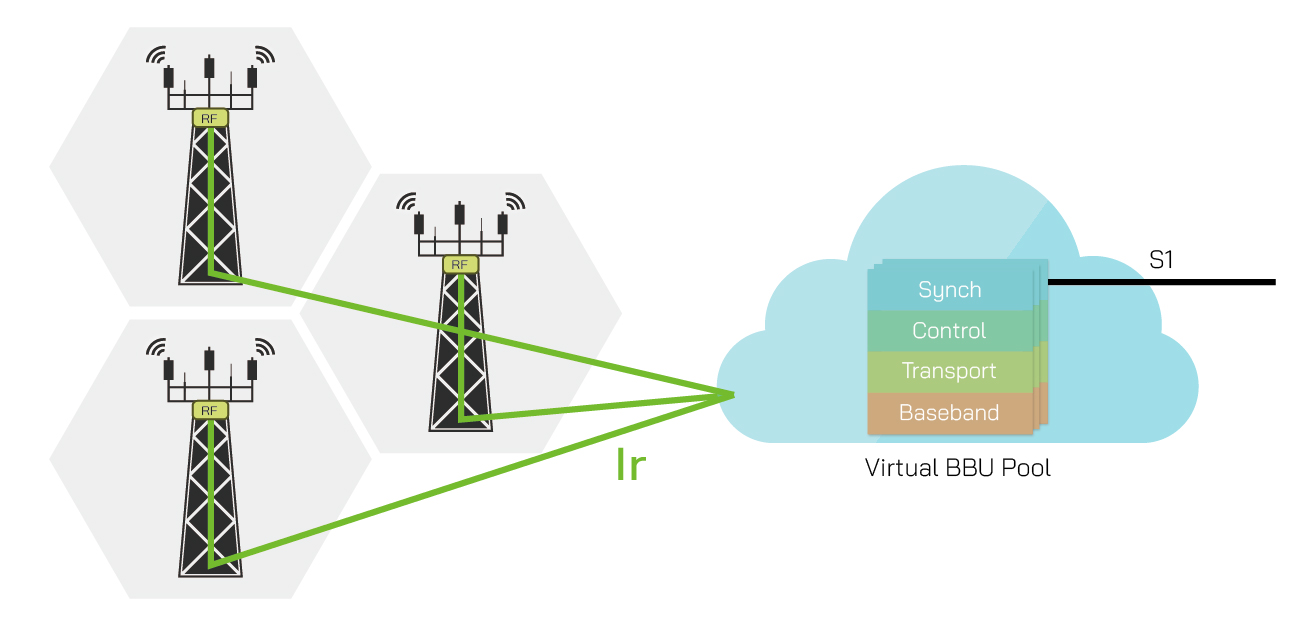
Solved issues:
- Virtualized BBU pool deployed on a single hardware can reduce cost and increase resource utilization.
- Save energy by reducing BBU hardware.
- Centralized BBU pool makes base stations cooperate much easier.
Existing issues:
- Require low latency and accurate synchronization on Ir interface.
Extra issues:
- Require higher backhaul bandwidth on S1 interface.
The Next Generation RAN
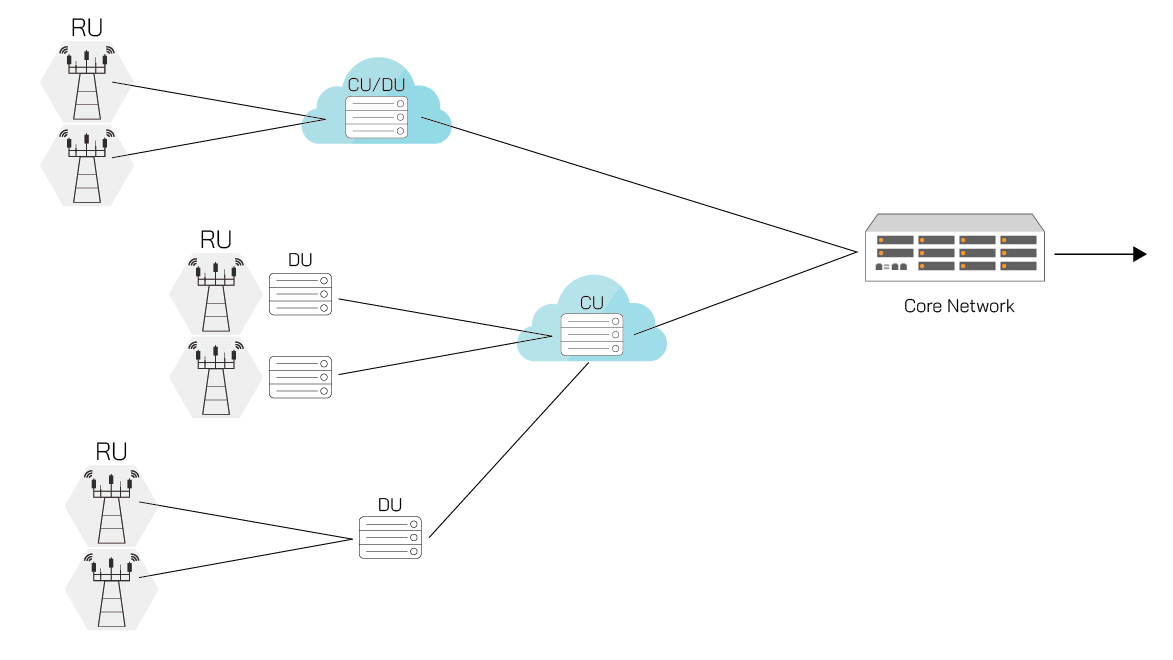
Separate RAN into three units: CU, DU, and RU that make your deployment more flexible.
- RU: The radio unit that handles RF and Low-PHY layer. The main considerations of RU design are size, weight and power consumption.
- DU: The distributed unit handles High-PHY, MACand RLC layers. This node runs a part of gNB functions depending on the functional split option, and controlled by the CU.
- CU: The centralized unit that handles PDCP and RRC layers.
The purposes of separating DU from RU:
- Less intelligent RU costs less
- The ability to control multiple RUs simultaneouslyto enable base station cooperation features like CoMP.
- Sharing baseband resource
The Evolution of Core Network
4G Core Network: EPC (Evolved Packet Core)
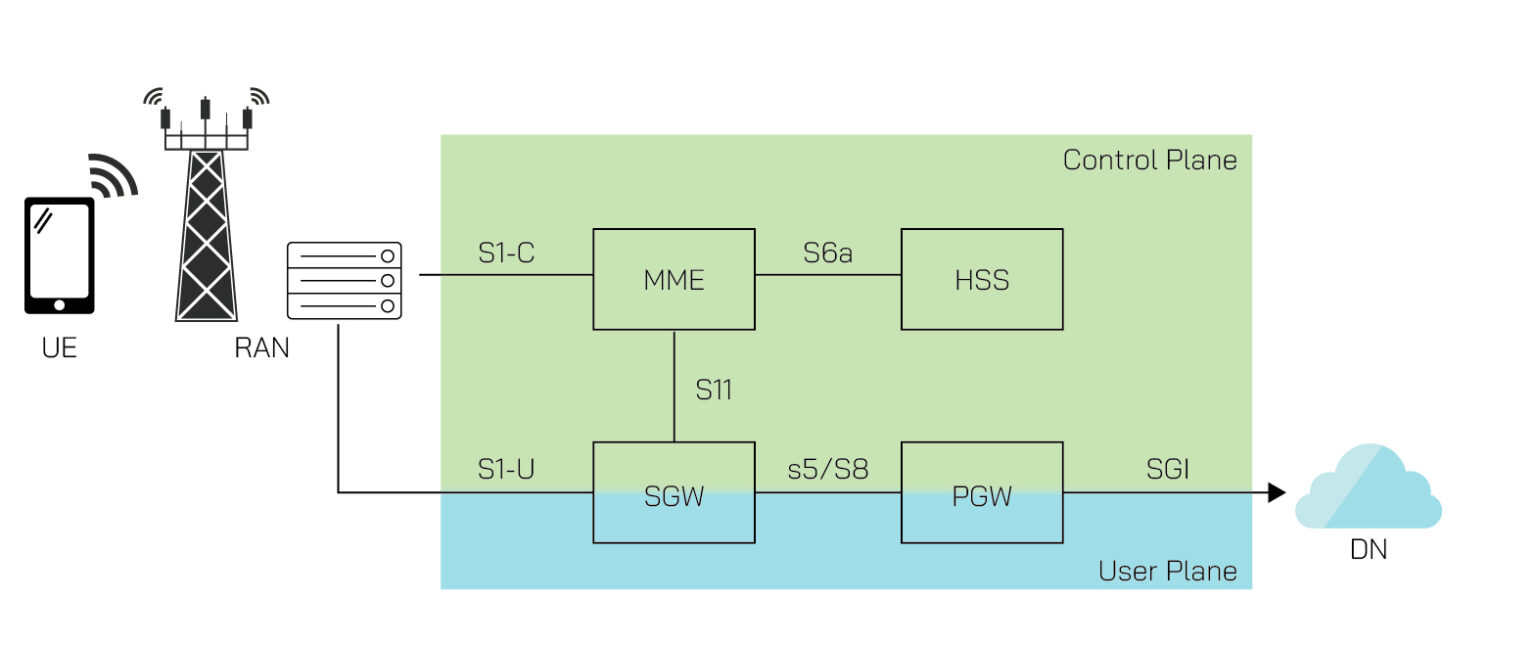
- Dedicated hardware and software for each network function.
- Point-to-Point interfaces between network functions.
- C/U plane are not completely separated.
- High expense and difficult to maintain, upgrade, recover, or add new services for operators.
5G Core Network
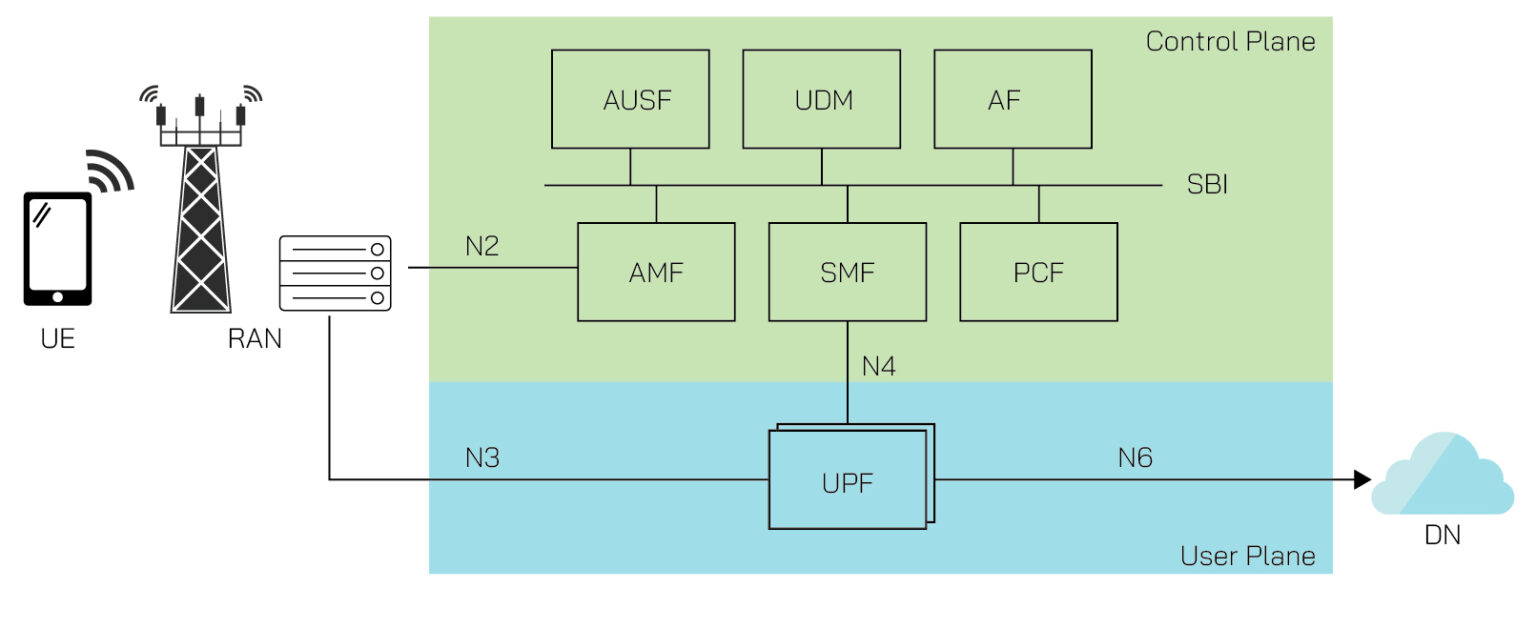
- Virtualized and modularized network functions on standard x86 servers.
- Service-Based Interface instead of Point-to-Point.
- Fully separated C/U plane.
- Lower expense and easier to maintain, upgrade, recover, or add new services for customized network slicefor operators.
Multi-access Edge Computing
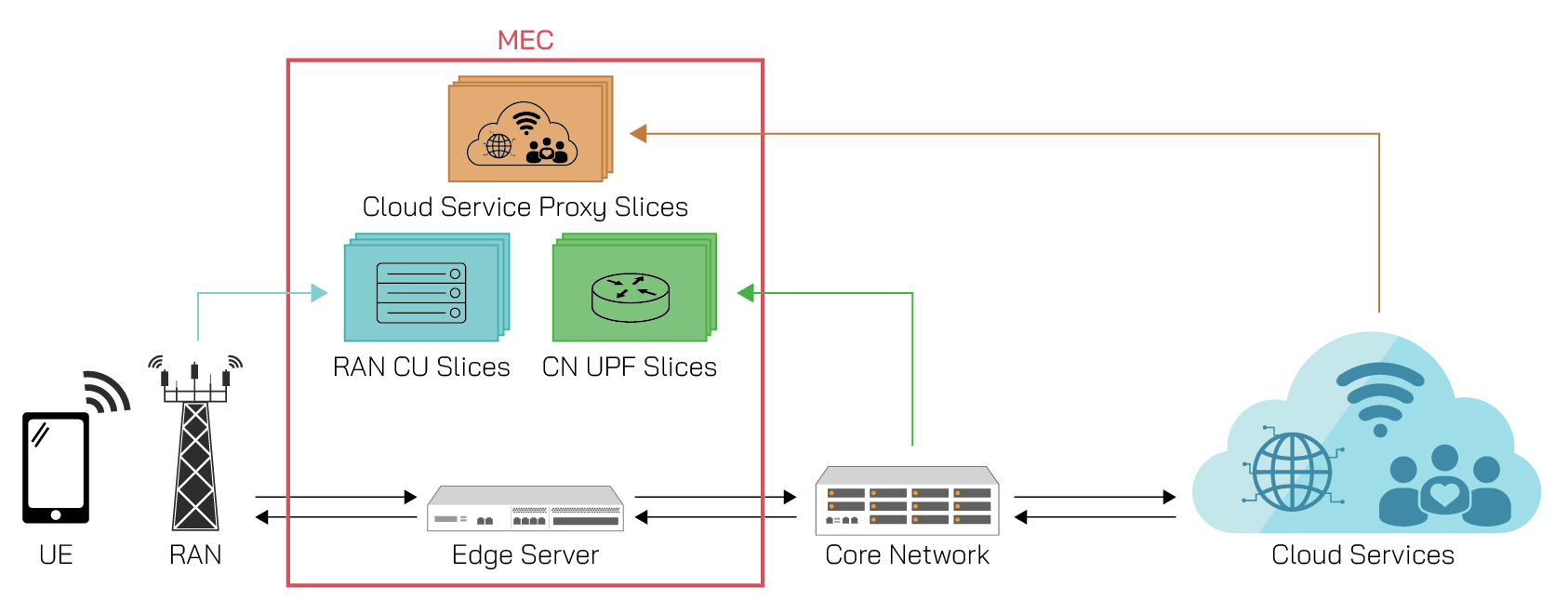
- Highly reduce latency of RAN.
- Highly save the bandwidth from core network to Internet.
- Perform as a pivotal control/data/information node in between RANs and CNs or even the Internet clouds.
Performance Optimization
- Specialized accelerators based on FPGA (or eASIC) and ASICs for offloading CPU on compute intensive FEC / LDPC tasks.
- Lowering hardware requirement for DU allowing lower CAPEX and reducing energy requirement for lower OPEX
Summary
- 5G is based on years of evolution in wireless technologies.
- Introducing the possibility of using general purpose equipment as feasible alternative to expensive ASIC based proprietary solutions.
- Lowering the hurdle for 5G deployment as well as making it possible for private entities to deploy their own private 5G networks.